
Stand outside any big glass office tower in Delhi and look up. That entire glass skin wrapped around the building isn’t just sheets of glass stuck to a wall — it’s a whole engineered system of aluminium profiles holding it up, keeping the weather out, and letting the building breathe with heat and wind without cracking. That system has a name: curtain walling. And almost none of it works without the right profiles behind it, which is exactly why choosing the right curtain wall profile manufacturer matters more than most people realize.
We’ve had more than a few architects and facade contractors ask us the same thing lately — “who’s actually your curtain wall profiles manufacturer, and can they hold up on a 15-storey job?” Fair question. So here’s an honest rundown of what curtain wall profiles are, the types you’ll come across, and what actually separates a manufacturer worth trusting from one that’s just cutting aluminium and hoping it holds.
What Is a Curtain Wall, Really? A Quick Primer From a Curtain Wall Profile Manufacturer
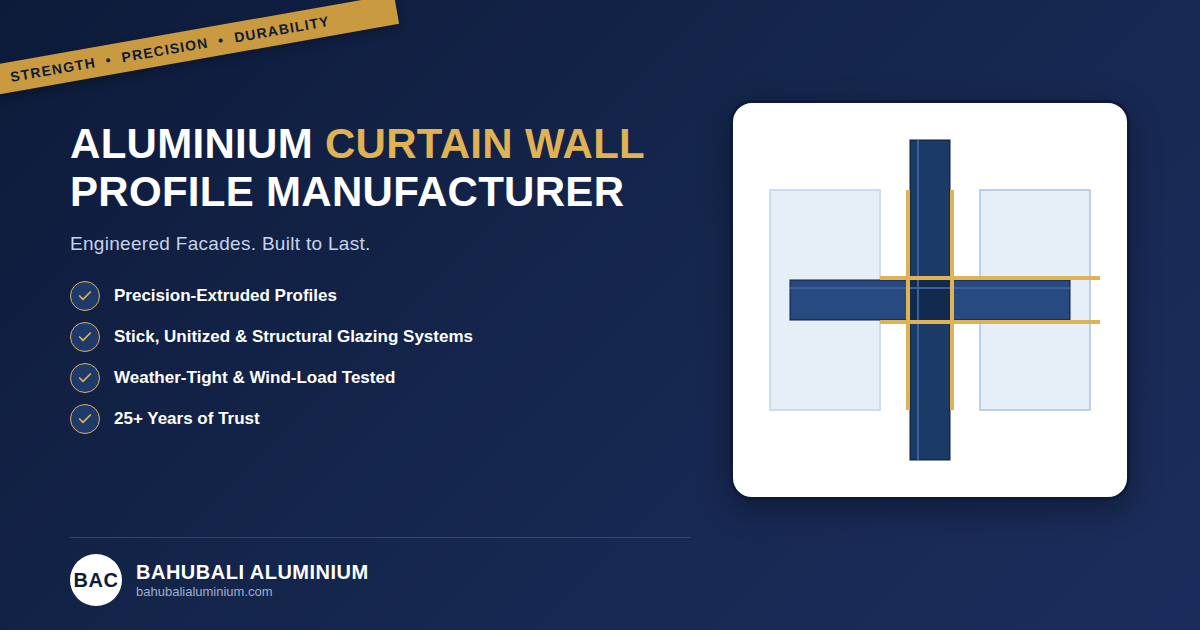
A curtain wall is the outer skin of a building that carries no structural load from the floors above — it just hangs off the building’s frame, like a curtain, which is where the name comes from. It’s built from aluminium mullions and transoms (the vertical and horizontal framing members) that hold glass, metal panels, or stone in place, while transferring wind and gravity loads back to the building’s structure.
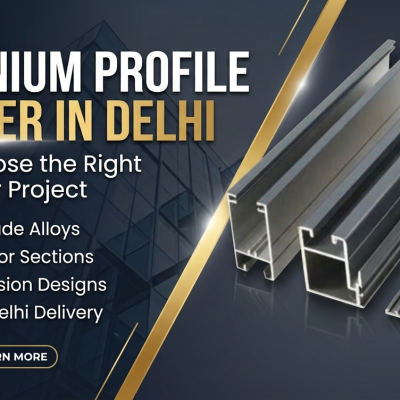
The aluminium profile is the backbone of the whole system. Get the profile design wrong — wrong wall thickness, poor thermal break, weak drainage channels — and you’re looking at water leakage, condensation problems, or worse, panels that can’t handle wind load. This is not a place to buy cheap and hope.
The Profile Types You’ll Run Into
Curtain wall systems aren’t one-size-fits-all. Depending on the building design, budget, and site conditions, you’ll typically be choosing between a few core systems.
Stick curtain wall profiles
The mullions and transoms are installed piece by piece on site, and glazing goes in after. It’s slower to install but far more flexible for irregular facades and smaller projects, and it’s usually the more budget-friendly route.
Unitized curtain wall profiles
Entire panels, glass and frame together, are pre-assembled in the factory and then lifted and fixed onto the building in one go. Faster on site, better quality control, and the go-to choice for large commercial towers where speed genuinely matters.
Semi-unitized profiles
A middle ground — some components are factory-assembled, some are finished on site. Useful when a project needs unitized speed but the budget or site access doesn’t fully support a full unitized system.
Structural glazing profiles
These are designed for that clean, frameless look where glass appears to be held with almost nothing visible from outside. The profile does all the structural work internally, usually with structural silicone and spider fittings doing the visible connection.
Where Curtain Wall Profiles End Up
Corporate office towers and IT parks are the obvious ones, but curtain walling shows up more often than people realize — shopping malls, airport terminals, hospital facades, hotel exteriors, even large residential high-rises going for a modern glass-heavy look. Anywhere a building wants a continuous, weather-tight glass skin rather than individual punched windows, curtain wall profiles are doing the structural work.
What to Actually Check Before You Pick a Manufacturer
This isn’t hardware you can afford to get wrong 20 storeys up. Before signing off on a manufacturer, it’s worth pushing on a few things:
- Wall thickness and alloy grade — ask for the actual technical datasheet, not just a verbal assurance.
- Thermal break quality — poor thermal breaks lead to condensation and energy loss, especially in Delhi’s extreme summer-winter swing.
- Wind load and structural testing data — has the profile actually been tested for the load your building height demands?
- Finish consistency — powder coating or anodizing that won’t fade or pit within a couple of monsoons.
- Track record on projects your size — a manufacturer used to small residential jobs may not be geared up for a 20-storey commercial facade.
Where Bahubali Aluminium Fits In
We’ve spent over 25 years manufacturing aluminium profiles for the Delhi NCR market, and curtain wall systems are one of the more technically demanding parts of that work — which is exactly why we take them seriously rather than treating them as just another extrusion order.
- Precision-extruded profiles built to the wall thickness and tolerance your structural drawings actually call for
- Options across stick, unitized, and structural glazing systems, so the system matches the building rather than the other way around
- Consistent powder-coated and anodized finishes that hold up through Delhi’s weather extremes
- Custom profile sections for non-standard facade designs, not just off-the-shelf dies
- Same-day dispatch across Delhi NCR to keep facade contractors on schedule
Whether it’s a stick system for a mid-rise office or a full unitized package for a commercial tower, our team will actually walk through the load requirements and drawings with you before quoting — not just hand you a price list.
The Bottom Line
A curtain wall looks like glass from the street, but everything holding it up, keeping water out, and letting it survive wind load for the next 25 years is aluminium profile that most people never think twice about. Pick the wrong manufacturer and that problem shows up years later as leaks, warping, or a facade that just doesn’t age well. Pick the right one, and it’s the kind of detail nobody ever notices — because nothing ever goes wrong.
If you’ve got a facade project on the drawing board anywhere in Delhi NCR, get in touch — we’re happy to talk through which curtain wall system actually fits your building.
📞 Get in touch for a quote — let’s build a facade that lasts.
A Few Questions People Usually Ask
What’s the difference between stick and unitized curtain wall systems?
Stick systems are assembled piece by piece on site, which is slower but more flexible. Unitized systems are pre-assembled in the factory as full panels and simply lifted into place, which is faster and better suited to large commercial towers.
Can curtain wall profiles be customized for a non-standard facade design?
Yes, profile sections can be custom-extruded to match specific structural and design requirements rather than relying only on standard dies.
Why does thermal break quality matter so much?
A poor thermal break lets heat and cold pass straight through the frame, which leads to condensation inside the building and higher energy costs — a bigger issue in a climate with Delhi’s summer-winter extremes.
Does Bahubali Aluminium supply for large commercial projects?
Yes, we manufacture curtain wall profiles across stick, unitized, and structural glazing systems, and supply for both mid-rise and large commercial facade projects across Delhi NCR.